Introduction
Frozen shoulder (adhesive capsulitis) is becoming increasingly common in Fort Lauderdale due to sedentary lifestyles, desk-based work, and post-injury stiffness that is left untreated. The condition causes progressive pain and loss of mobility, making even simple daily movements, like lifting your arm, dressing, or reaching overhead, difficult.
In South Florida’s active population, this condition is especially frustrating because it limits both work performance and lifestyle activities. Clinics like TheraCave Physical Therapy in Fort Lauderdale provide specialized shoulder rehabilitation programs designed to restore movement through evidence-based therapy and individualized exercise plans.
Understanding the Local Challenge: Why Frozen Shoulder Gets Worse
In Fort Lauderdale, frozen shoulder cases often worsen because patients delay treatment or rely only on pain medication instead of movement-based rehabilitation.
Common contributing factors include:
- Long hours of desk or computer work
- Post-surgery shoulder immobilization
- Diabetes-related stiffness (common risk factor)
- Sports or gym injuries left untreated
- Poor posture habits over time
Without guided rehabilitation, the shoulder capsule tightens further, reducing range of motion and increasing pain cycles.
Professional physical therapy focuses on reversing this stiffness through controlled, progressive movement training.
Job Story: A Frozen Shoulder Recovery Case in Fort Lauderdale
A middle-aged office worker from Fort Lauderdale developed frozen shoulder after recovering from a minor rotator cuff strain. At first, they ignored the stiffness, assuming it would resolve naturally. However, within weeks, their shoulder became increasingly painful and immobile.
The Problem
- Severe pain when lifting the arm
- Inability to reach behind the back
- Sleep disruption due to shoulder discomfort
- Gradual loss of range of motion
Daily tasks like driving and dressing became difficult, leading the patient to seek professional help.
The Treatment Approach
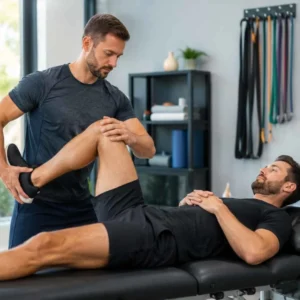
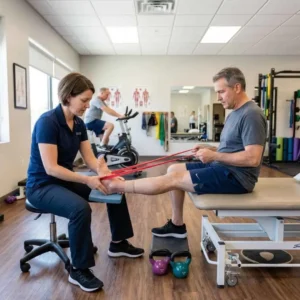
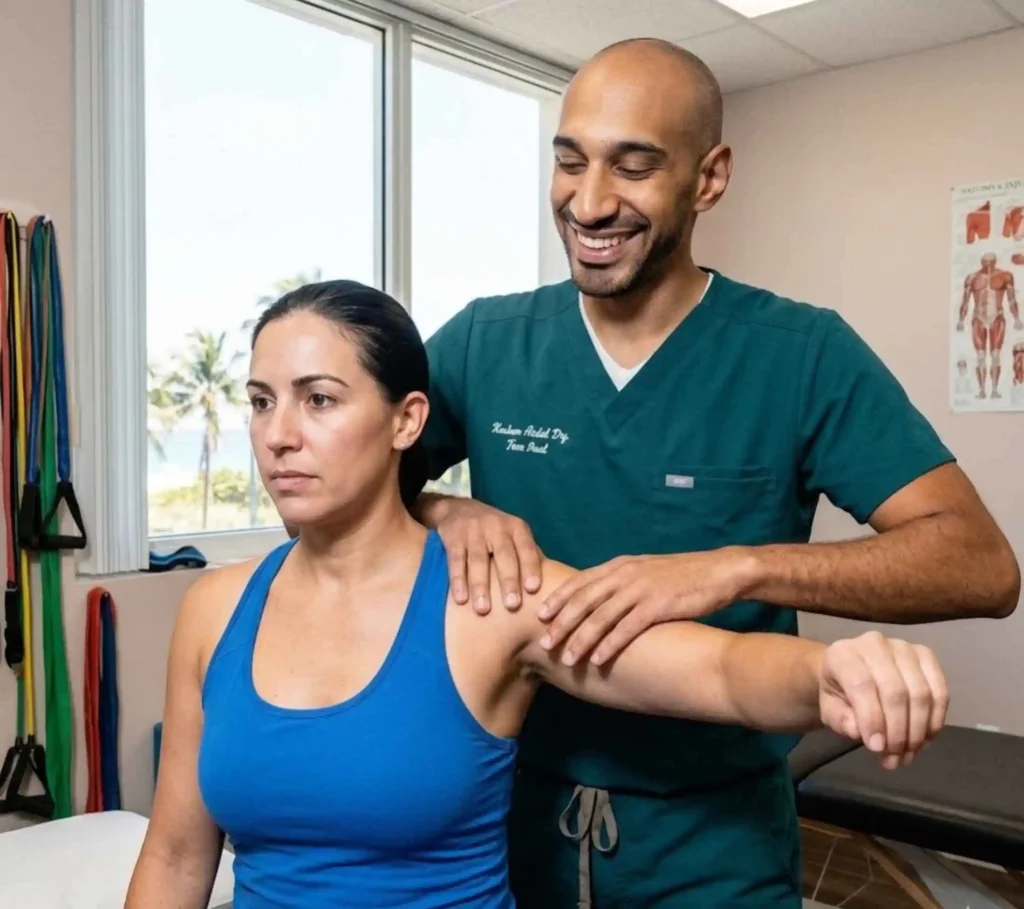
At TheraCave, the patient underwent a structured rehabilitation program including:
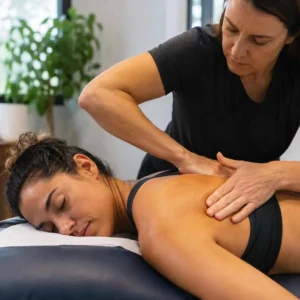
- Manual therapy to reduce joint stiffness
- Guided stretching for capsular tightness
- Active range-of-motion exercises
- Scapular stabilization training
- Progressive strengthening exercises
The focus was not just pain relief, but restoring full shoulder mechanics through controlled movement and consistency.
The Outcome
After several weeks of supervised rehabilitation:
- Pain levels significantly reduced
- Shoulder mobility improved gradually
- Daily activities became manageable again
- Sleep quality improved
This is a typical recovery pathway when frozen shoulder is treated with structured physical therapy instead of passive rest alone.
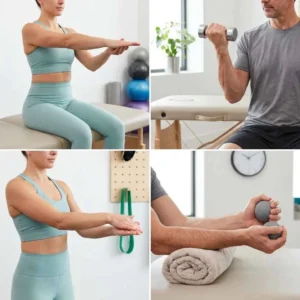
Key Rehabilitation Exercises for Frozen Shoulder
1. Pendulum Swings
This gentle exercise helps reduce stiffness and improve joint lubrication.
- Lean forward slightly
- Let the affected arm hang freely
- Swing in small circular motions
- Gradually increase movement range
2. Wall Crawls (Finger Walks)
Improves shoulder flexion and overhead movement.
- Face a wall
- Slowly “walk” fingers upward
- Hold at the highest comfortable point
- Return slowly and repeat
3. External Rotation with Towel
Restores rotational mobility.
- Hold a towel behind your back
- Use the unaffected arm to gently pull
- Keep movement slow and controlled
4. Shoulder Blade Squeezes
Strengthens supporting muscles for stability.
- Sit or stand upright
- Pull shoulder blades together
- Hold for 5 seconds
- Release slowly
5. Assisted Arm Raises
Helps regain overhead movement safely.
- Use the unaffected arm for support
- Lift the affected arm forward
- Avoid forcing painful range
Why Professional Physical Therapy Is Essential
Frozen shoulder is not a condition that improves quickly with random exercise. In fact, incorrect movement can worsen inflammation or prolong stiffness.
Professional treatment ensures:
- Correct stage-based rehabilitation (freezing, frozen, thawing phases)
- Controlled progression of exercise intensity
- Pain-safe movement strategies
- Prevention of compensatory movement patterns
- Hands-on joint mobilization techniques
At clinics like TheraCave, treatment is designed to combine manual therapy with targeted exercise progression for faster and safer recovery.
Professional Advantage: Why DIY Exercise Isn’t Enough
Many patients attempt home exercises too aggressively, which can slow recovery.
Risks of self-guided rehab:
- Overstretching inflamed tissue
- Incorrect exercise form
- Skipping mobility progression stages
- Worsening pain during flare-ups
- Delayed healing due to inconsistency
Professional therapists monitor progress and adjust exercises based on how the shoulder responds week by week.
How Structured Therapy Speeds Up Recovery
At advanced physical therapy clinics in Fort Lauderdale, frozen shoulder treatment typically includes:
- Manual joint mobilization to break stiffness
- Soft tissue therapy for muscle tightness
- Progressive resistance training
- Functional movement retraining
- Home exercise programming
This combination restores not only mobility but also long-term shoulder function.
Conclusion: Recovery Is Possible With the Right Approach
Frozen shoulder can feel limiting and frustrating, especially when progress is slow. However, with structured rehabilitation exercises and professional guidance, full recovery is achievable.
In Fort Lauderdale, clinics like TheraCave provide evidence-based physical therapy programs that focus on restoring mobility, reducing pain, and helping patients return to normal life safely and efficiently.
Call to Action
If you are struggling with frozen shoulder in Fort Lauderdale, don’t wait for stiffness to worsen.
Book a professional physical therapy consultation today and start a guided rehabilitation program designed to restore your shoulder mobility and improve your quality of life.