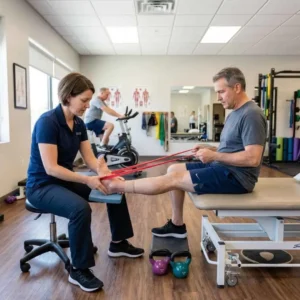
Recovering from Ankle Fractures is about more than waiting for the bone to heal. After a period of immobilization, reduced weight-bearing, or surgery, many Fort Lauderdale patients are left with stiffness, weakness, swelling, balance problems, and uncertainty when walking again. Ankle Fracture PT in Fort Lauderdale can help bridge the gap between bone healing and getting back to normal movement. A structured rehabilitation program gradually restores mobility, strength, balance, and functional confidence while respecting the stage of healing.
TheraCave Physical Therapy takes an individualized approach to rehabilitation. Its physical therapy programs begin with an assessment of the patient’s condition, movement limitations, and goals before creating a personalized treatment plan. The clinic identifies fractures among the musculoskeletal injuries that physical therapy can help rehabilitate and emphasizes restoring movement, reducing pain, improving strength, and returning patients to function.
Why Ankle Fractures Recovery Takes More Than Rest
An Ankle Fractures can temporarily change the way a person walks, stands, and uses the injured leg.
During the initial healing period, the ankle may be immobilized or protected from full weight-bearing. As a result, surrounding muscles can become weaker, the joint can become stiff, and normal movement patterns can change.
Even after a physician confirms that the fracture is healing appropriately, a patient may still have difficulty with:
- Walking normally
- Going up and down stairs
- Standing for long periods
- Moving the ankle through its full range
- Maintaining balance
- Pushing off the foot during walking
- Returning to exercise or sports
Physical therapy addresses these functional limitations through a gradual rehabilitation process rather than expecting the patient to immediately return to normal activity.
TheraCave describes physical therapy as a combination of assessment, therapeutic exercise, manual therapy, and other appropriate modalities designed to help patients regain movement, reduce pain, and improve quality of life.
What Happens During Early Ankle Fractures Rehabilitation?
The first stage of rehabilitation is usually focused on restoring movement safely while respecting medical restrictions.
The exact timing depends on the fracture, whether surgery was required, how the bone is healing, and instructions from the treating physician.
Restoring Ankle Mobility
An immobilized ankle can become stiff. Once movement is medically appropriate, a physical therapist can introduce carefully selected range-of-motion exercises.
These movements may target the ankle and surrounding joints to gradually improve flexibility and reduce stiffness.
The goal is not to force the ankle into painful positions. Instead, movement is progressed according to the patient’s healing status and tolerance.
TheraCave’s physical therapy model emphasizes personalized treatment plans rather than generic exercise routines, allowing rehabilitation to be adjusted according to the patient’s condition and progress.
Managing Swelling and Discomfort
Swelling can remain an issue after an Ankle Fractures, particularly when activity increases.
Physical therapy may incorporate appropriate pain-management strategies alongside movement and exercise. TheraCave’s broader rehabilitation services include pain management, manual therapy, and therapeutic exercise as components of individualized recovery programs.
A therapist can also help patients understand how activity levels should progress rather than repeatedly moving between doing too much and resting completely.
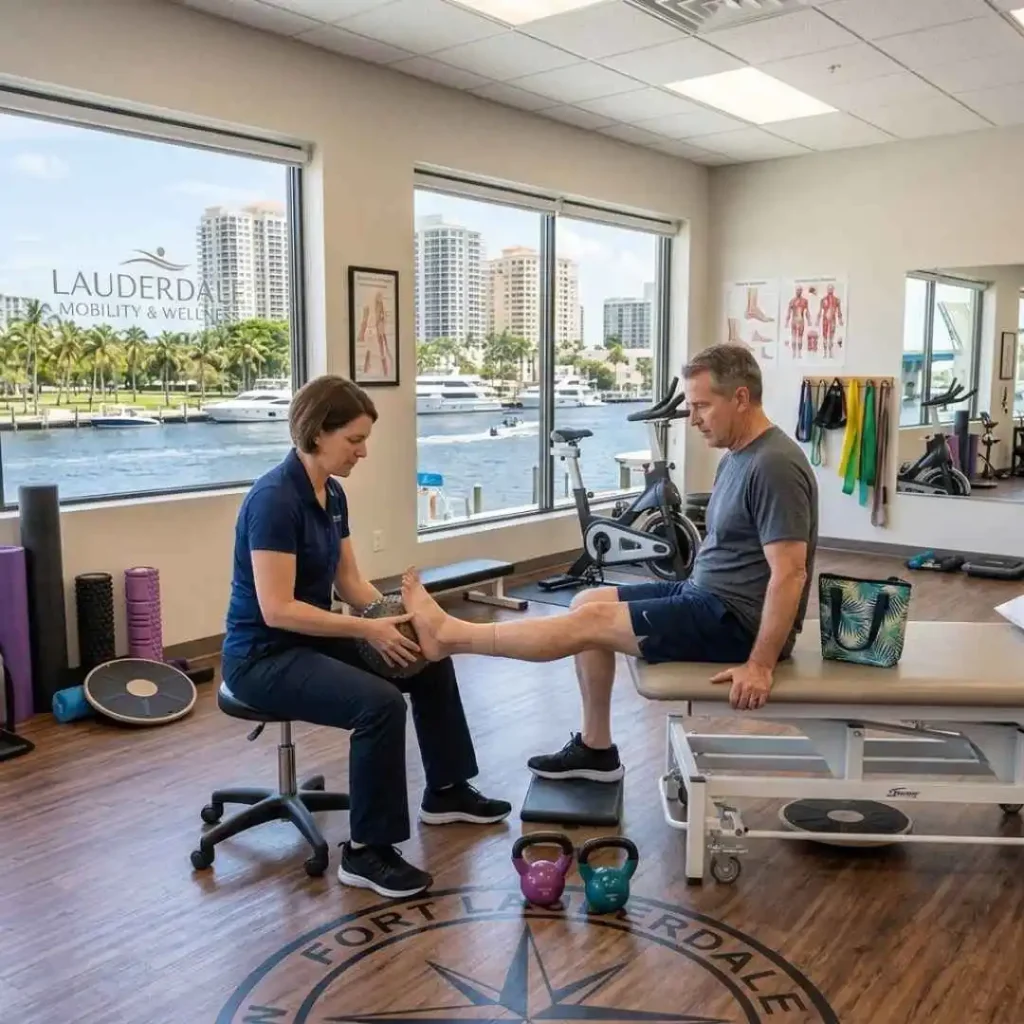
Rebuilding Strength After an Ankle Fractures
Weakness is one of the most common challenges following a period of immobilization or reduced activity.
The muscles of the lower leg and foot may not have been working normally for weeks. Even the rest of the body can compensate for the injured leg by shifting weight elsewhere.
Once appropriate, rehabilitation progresses toward strengthening exercises.
Calf and Lower-Leg Strength
The calf muscles play an important role in walking, stair climbing, running, and pushing the body forward.
A therapist may gradually introduce exercises that restore calf strength based on the patient’s healing stage and weight-bearing restrictions.
Foot and Ankle Control
Strengthening is not only about producing force. The ankle also needs to control movement during walking and other activities.
Therapeutic exercises can be progressed to challenge stability and coordination as recovery advances.
TheraCave’s exercise physiotherapy services focus on improving strength, flexibility, endurance, mobility, and function while tailoring exercises to the individual’s condition and goals.
Learning to Walk Normally Again
A person may develop an altered walking pattern after an Ankle Fractures.
For example, someone may avoid putting full weight through the injured side or take shorter steps because they are protecting the ankle. Even after the fracture heals, that habit can remain.
Physical therapy can address these movement changes by progressively retraining walking mechanics.
The therapist observes how the patient stands, shifts weight, takes steps, and uses the ankle during movement. Exercises can then be selected to address specific weaknesses or coordination problems.
This is important because successful fracture rehabilitation is not simply about making the ankle stronger. The ankle needs to work correctly as part of the entire lower-extremity movement system.
Balance Training After a Broken Ankle
Balance can be significantly affected after an ankle injury.
The ankle contains sensory structures that help the nervous system understand where the foot is positioned. When movement has been restricted, balance and confidence can decline.
A rehabilitation program may therefore introduce progressively challenging balance exercises.
Early exercises might involve stable positions with support. Later stages can introduce more demanding movements as strength and control improve.
TheraCave’s physical therapy approach includes improving coordination and balance as part of rehabilitation and injury prevention.
Why Balance Matters
Good balance helps with everyday activities such as:
- Walking on uneven surfaces
- Using stairs
- Getting in and out of a vehicle
- Standing on one leg
- Changing direction
- Returning to recreational activities
For athletes, balance and ankle control become even more important when returning to running, jumping, cutting, or sport-specific movement.
A Typical Fort Lauderdale Recovery Scenario
Consider a Fort Lauderdale resident who fractures an ankle after a fall. The ankle is immobilized, and weight-bearing is restricted while the fracture heals.
Several weeks later, the patient receives clearance to begin progressing activity. The bone is healing, but the ankle feels stiff and weak. Walking feels unnatural, and the patient is hesitant to use stairs without support.
This is where rehabilitation becomes important.
Instead of immediately returning to normal activity, the patient works through a structured progression. Initial treatment may emphasize mobility and controlled movement. Strengthening is added as tolerated, followed by balance training, walking mechanics, and functional activities.
As the patient becomes stronger and more confident, exercises can become increasingly demanding.
TheraCave follows a personalized rehabilitation model in which therapists evaluate the patient’s condition, establish goals, guide treatment, and adjust the plan according to progress.
The result is a recovery process built around what the patient can safely do now rather than what they hope to do immediately.
Why Professional Physical Therapy Matters
An Ankle Fractures is not the ideal time to rely on a generic internet exercise program.
The rehabilitation timeline can differ considerably between patients.
A person recovering from a simple fracture may have different restrictions from someone who required surgical fixation. Weight-bearing status, pain, swelling, range of motion, strength, and balance all influence exercise selection.
Individualized Progression
TheraCave emphasizes personalized treatment plans based on the patient’s needs, condition, and goals. Its physical therapy process includes a comprehensive assessment followed by a tailored program and ongoing guidance.
That matters because rehabilitation should progress as the patient improves.
Increasing resistance or activity too quickly can overload tissues that are not ready. Progressing too slowly can leave the patient unnecessarily weak or stiff.
A therapist can monitor the response and make appropriate adjustments.
Functional Testing
The ultimate goal is not simply completing exercises in a clinic.
Patients need to walk, climb stairs, work, exercise, and participate in daily activities.
TheraCave’s rehabilitation philosophy emphasizes restoring function and helping patients return to the activities they value. Its exercise physiotherapy services specifically focus on mobility, strength, endurance, balance, and functional improvement.
Returning to Exercise and Sports
Returning to exercise after an Ankle Fractures should be gradual.
Walking comfortably is an important milestone, but it does not necessarily mean the ankle is ready for running, jumping, or rapid changes in direction.
Athletes may need additional work on:
- Single-leg strength
- Balance
- Landing control
- Calf strength
- Agility
- Coordination
- Sport-specific movement
TheraCave provides sports injury rehabilitation with progressive programs designed around the individual’s injury, physical condition, and return-to-activity goals. Its rehabilitation model progresses from evaluation and pain management toward strength, stability, mobility, and functional performance.
This staged approach helps reduce the temptation to return to demanding activity simply because the Ankle Fractures feels somewhat better.
Post-Surgical Ankle Fractures Rehabilitation
Some ankle fractures require surgical fixation. In these cases, rehabilitation must follow the surgeon’s restrictions and the healing timeline.
Post-surgical physical therapy may address pain and swelling, stiffness, muscle weakness, altered movement, and loss of confidence.
TheraCave’s post-orthopedic surgery rehabilitation service is designed for patients recovering from procedures including fracture fixation. The clinic describes its approach as personalized rehabilitation focused on restoring strength, mobility, function, and confidence after orthopedic surgery.
Patients should never assume that a standard ankle exercise program is appropriate immediately after surgery. The treating medical team should determine when specific movements and weight-bearing activities are safe.
How Long Does Ankle Fractures Physical Therapy Take?
There is no universal recovery timeline.
The duration of rehabilitation depends on factors such as:
- Type and severity of fracture
- Whether surgery was required
- Length of immobilization
- Weight-bearing restrictions
- Existing strength and mobility
- Pain and swelling
- Age and general activity level
- Consistency with the rehabilitation program
- Functional goals
TheraCave notes that physical therapy timelines vary according to the individual’s condition, treatment goals, and response to therapy.
The objective should not be to finish rehabilitation as quickly as possible. It should be to restore useful movement and strength safely and sustainably.
FAQs About Ankle Fractures Physical Therapy
When should physical therapy begin after an Ankle Fractures?
The timing depends on the fracture, treatment, and physician’s instructions. Some patients begin therapy while the ankle is still protected, while others start more intensive rehabilitation after healing has progressed.
Can physical therapy help after Ankle Fractures surgery?
Yes. Physical therapy can be an important part of recovery following fracture fixation. TheraCave provides post-orthopedic surgery rehabilitation designed to restore mobility, strength, and function after procedures including fracture fixation.
What does Ankle Fractures rehabilitation include?
Depending on the stage of recovery, rehabilitation may include mobility exercises, strengthening, balance training, gait retraining, manual therapy, and functional exercises.
How do I know when I am ready to return to sports?
Return to sports should be based on healing, strength, mobility, balance, movement control, and the demands of the activity rather than simply the amount of time since the fracture.
Is physical therapy painful after an Ankle Fractures?
Some stretching, strengthening, or movement may create mild discomfort, but rehabilitation should be appropriately progressed. TheraCave notes that physical therapy should not be excessively painful and that techniques can be adjusted to maintain patient comfort.
Rebuild Your Ankle Function With Professional Rehabilitation
An Ankle Fractures can affect much more than the bone itself. Weeks of reduced movement can leave the ankle stiff, the surrounding muscles weak, balance impaired, and walking mechanics altered.
Professional physical therapy helps address those problems step by step.
TheraCave Physical Therapy uses personalized assessment and rehabilitation programs to help patients recover mobility, strength, balance, and function after musculoskeletal injuries and orthopedic procedures. Its approach combines therapeutic exercise with appropriate hands-on care and other evidence-based techniques when needed.
If an ankle fracture has left you struggling with stiffness, weakness, walking, balance, or a return to normal activities, contact TheraCave Physical Therapy at (954) 284-0716 to schedule an evaluation and discuss a rehabilitation plan tailored to your recovery.