Feeling dizzy when turning your head, getting out of bed, or looking upward can make everyday activities uncomfortable and sometimes frightening. In Fort Lauderdale, where residents enjoy outdoor activities, walking, exercise, and active lifestyles, recurring vertigo can interfere with independence and mobility. One common cause is Benign Paroxysmal Positional Vertigo (BPPV), an inner ear condition that creates brief episodes of spinning sensations when the head changes position. The Epley Maneuver is a specialized treatment used in vertigo rehabilitation to help reposition displaced inner ear crystals and reduce dizziness. At TheraCave Physical Therapy in Fort Lauderdale, trained professionals use positional maneuvers and personalized vestibular rehabilitation to help patients improve balance and regain confidence in daily movement.
What Is the Epley Maneuver?
The Epley Maneuver is a therapeutic technique designed to treat Benign Paroxysmal Positional Vertigo (BPPV). This condition develops when tiny calcium carbonate particles, commonly called ear crystals or otoconia, move from their normal location into one of the semicircular canals of the inner ear.
These canals help the body detect head movement and maintain balance. When displaced crystals move inside them, they interfere with the normal movement of inner ear fluid. As a result, the brain receives confusing signals about head position, creating a sensation that the surroundings are spinning.
The Epley Maneuver uses a carefully controlled sequence of head and body positioning movements to guide these particles out of the affected semicircular canal and toward an area where they are less likely to trigger dizziness.
It is a non-surgical treatment that can provide significant relief for many people experiencing BPPV.
How Does the Epley Maneuver Work?
The inner ear contains a vestibular system responsible for detecting movement and helping the brain maintain balance. When crystals become displaced, certain head movements cause them to shift and stimulate sensitive structures inside the semicircular canals.
The Epley Maneuver addresses this problem through specific positional changes.
Repositioning Displaced Ear Crystals
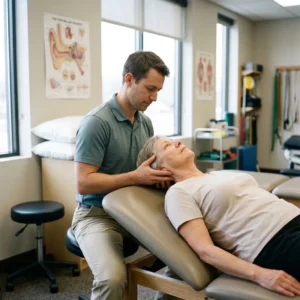
During treatment, a trained physical therapist guides the patient’s head and body through a series of carefully selected positions. Gravity helps move the displaced crystals through the affected canal and back toward the vestibule, where they are less likely to interfere with balance signals.
Restoring Normal Balance Signals
Once the crystals are repositioned, the abnormal stimulation that triggers spinning sensations may decrease. This allows the vestibular system to function more normally and helps reduce positional dizziness.
Supporting Long-Term Symptom Improvement
Many patients experience improvement after one or a few treatment sessions. However, some individuals require additional repositioning procedures or further vestibular rehabilitation, depending on their condition and response to treatment.

What Symptoms Can the Epley Maneuver Help Treat?
The Epley Maneuver is primarily recommended for posterior canal BPPV, one of the most common forms of positional vertigo. Patients with this condition may experience several symptoms that interfere with normal activities.
Spinning Sensations When Changing Positions
A person may feel that the room is rotating when lying down, rolling over in bed, sitting up, or looking upward. These episodes are often brief but can occur repeatedly throughout the day.
Dizziness and Loss of Balance
Disrupted signals from the inner ear can make standing and walking feel unstable. Some patients become hesitant to move their heads because they expect another episode of dizziness.
Nausea and Difficulty Focusing
Vertigo can affect more than balance. Sudden spinning sensations may cause nausea, vomiting, blurred vision, and difficulty concentrating.
Anxiety About Everyday Movements
Repeated dizziness can make simple activities such as getting out of bed, bending down, or reaching overhead stressful. Professional treatment can help patients understand their condition and work toward restoring confidence.
It is important to understand that the Epley Maneuver does not treat every cause of vertigo. Conditions such as vestibular neuritis, vestibular migraine, and Meniere’s disease require different treatment approaches.
How Vertigo Rehabilitation Helps Patients in Fort Lauderdale
Although the Epley Maneuver can be highly effective for BPPV, some patients continue experiencing balance problems even after the positional vertigo improves. This is where comprehensive vertigo rehabilitation becomes important.
At TheraCave, treatment begins with a detailed evaluation of the patient’s symptoms, balance, head and eye movements, posture, and medical history.
Detailed Vestibular Assessment
A physical therapist evaluates how the vestibular system responds to different movements and positions. Positional testing, such as the Dix-Hallpike test when appropriate, can help identify the affected semicircular canal and determine whether BPPV is present.
Balance and Gait Training
Balance exercises help patients improve stability while standing, walking, and performing everyday activities. Gait training can also help reduce fall risks and rebuild confidence during movement.
Personalized Rehabilitation Plans
Not every patient experiences vertigo in the same way. Some need positional maneuvers, while others benefit from additional vestibular exercises and progressive balance training. TheraCave develops individualized treatment plans according to each patient’s symptoms and rehabilitation goals.
Why Professional Epley Maneuver Treatment Is Important
The Epley Maneuver may look like a simple sequence of head movements, but successful treatment requires an accurate diagnosis and proper technique. Attempting positional maneuvers without understanding the underlying condition can lead to ineffective treatment or increased discomfort.
Correct Identification of the Affected Ear
BPPV can affect different semicircular canals and may involve either ear. A physical therapist uses clinical assessments to identify the likely location of the displaced crystals before selecting an appropriate repositioning technique.
Safe Positioning and Movement
Certain patients may have neck problems, limited mobility, spinal conditions, or other medical concerns that require modifications to positional testing and treatment. Professional supervision helps ensure that movements are appropriate for the individual’s physical condition.
Identifying Other Causes of Vertigo
Not all dizziness comes from displaced inner ear crystals. Vestibular disorders, neurological conditions, and other medical problems can produce similar symptoms. A professional evaluation helps determine whether the Epley Maneuver is suitable or whether further medical assessment is necessary.
Preventing Persistent Balance Problems
Even after successful crystal repositioning, some patients experience lingering unsteadiness or movement sensitivity. A structured rehabilitation program can address these problems through targeted balance and vestibular exercises.
For these reasons, professional assessment and treatment are preferable to repeatedly attempting repositioning techniques without a confirmed diagnosis.
A Common Patient Scenario: Overcoming Recurring Morning Dizziness
Consider a Fort Lauderdale resident who regularly wakes up feeling that the bedroom is spinning. Initially, the dizziness lasts only a few seconds when turning from one side to another. However, the episodes become more frequent, making it difficult to get out of bed, exercise, or complete daily activities comfortably.
After seeking professional assistance, the patient undergoes a vestibular assessment. The physical therapist identifies symptoms consistent with BPPV and performs appropriate positional testing to determine whether the Epley Maneuver is suitable.
Once the affected canal is identified, the therapist guides the patient through the repositioning procedure. The treatment is followed by an individualized rehabilitation plan that may include balance and gait training if ongoing instability is present.
With appropriate treatment and follow-up, the patient works toward reducing dizziness and returning to normal daily activities.
This is an illustrative example of how vestibular rehabilitation may help someone with BPPV, rather than a verified TheraCave patient testimonial. Individual recovery experiences vary.
Why Choose TheraCave for Vertigo Rehabilitation in Fort Lauderdale?
Finding the right physical therapy provider is important when dizziness begins affecting daily life. TheraCave takes a personalized, movement-focused approach to vertigo rehabilitation, helping patients address the underlying causes of balance difficulties.
The clinic offers several treatment approaches, including:
- Detailed assessment of balance, posture, and head and eye movements.
- Positional maneuvers, including the Epley Maneuver for appropriate BPPV cases.
- Balance and gait training to improve stability.
- Personalized vestibular rehabilitation programs.
- Progressive treatment plans adjusted according to patient improvement.
TheraCave serves Fort Lauderdale and surrounding Broward County communities, including Davie, Plantation, Sunrise, Tamarac, Miramar, Hollywood, Coral Springs, and Pembroke Pines.
The goal is to help patients reduce dizziness, improve movement confidence, and return to everyday activities with greater stability.
Frequently Asked Questions
1. How effective is the Epley Maneuver for vertigo?
The Epley Maneuver is an effective treatment for many people with posterior canal BPPV. It helps reposition displaced inner ear crystals and can significantly reduce positional dizziness.
2. How many Epley Maneuver sessions are needed?
Some patients experience relief after one session, while others require additional treatments. The number depends on the affected ear, condition severity, and individual response.
3. Can vertigo return after the Epley Maneuver?
Yes. BPPV can recur even after successful treatment. A physical therapist can reassess symptoms and determine whether another repositioning procedure is appropriate.
4. Is the Epley Maneuver suitable for all types of vertigo?
No. It is primarily designed for posterior canal BPPV. Other vestibular conditions require different treatment strategies and professional evaluation.
5. Can physical therapy help with balance after vertigo?
Yes. Vestibular rehabilitation includes balance exercises, gait training, and movement-based activities that can help improve stability and reduce fall risks.
6. When should someone seek professional help for vertigo?
Recurring dizziness, spinning sensations, nausea, or balance difficulties should be evaluated by a healthcare professional. Sudden severe dizziness accompanied by weakness, difficulty speaking, double vision, a severe headache, or difficulty walking requires emergency medical assessment.
Regain Your Balance with Professional Vertigo Rehabilitation
Recurring dizziness should not prevent you from enjoying everyday activities. Whether you experience spinning sensations when getting out of bed, difficulty maintaining balance, or recurring symptoms associated with BPPV, professional vestibular rehabilitation can help you find an appropriate treatment approach.
TheraCave Physical Therapy provides personalized vertigo rehabilitation in Fort Lauderdale, including professional positional maneuvers such as the Epley Maneuver, balance training, and vestibular therapy.
Call (954) 284-0716 or visit TheraCave at 1 E Broward Blvd, Suite 700, Fort Lauderdale, FL 33301, to schedule your consultation and take the first step toward better balance.