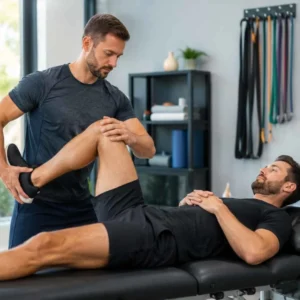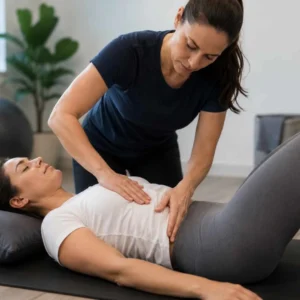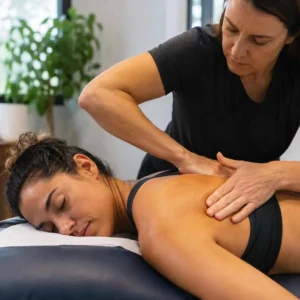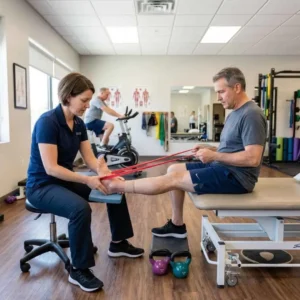
Elbow pain can make ordinary activities surprisingly difficult. In Fort Lauderdale, repetitive work, sports, gym training, computer use, and everyday lifting can place repeated stress on the muscles and tendons around the elbow. When discomfort starts interfering with gripping, lifting, bending the arm, or participating in favorite activities, carefully selected exercises can help restore movement and strength. Elbow Pain Relief Exercises in Fort Lauderdale should not simply focus on making pain disappear; the goal is to identify what is causing the problem and progressively restore normal function.
TheraCave Physical Therapy takes a personalized approach to elbow and hand conditions. Its physical therapists evaluate the source of pain before developing a treatment plan that can incorporate therapeutic exercise, manual therapy, stretching, strengthening, and other appropriate techniques. For conditions such as golfer’s elbow, the clinic focuses on reducing pain, improving flexibility, strengthening surrounding muscles, and correcting movement problems that may contribute to recurring symptoms.
Why Elbow Pain Relief Shouldn’t Be Ignored
The elbow connects the upper arm to the forearm and allows the hand to perform countless movements. Problems in the joint, tendons, muscles, or surrounding tissues can therefore affect much more than the elbow itself.
For example, golfer’s elbow can cause pain or tenderness on the inside of the elbow, weakness in grip strength, stiffness, and discomfort that travels down the forearm. It can develop from repetitive gripping, lifting, wrist movements, or other forms of overuse.
Tennis elbow affects the outside of the elbow and can similarly interfere with gripping and lifting. TheraCave describes tennis elbow as an overuse condition involving the wrist extensor tendons and emphasizes progressive rehabilitation rather than relying on rest alone.
Because different elbow conditions can produce similar symptoms, randomly choosing exercises is not always the best strategy.
Exercises That May Support Elbow Pain Relief Recovery
Exercise selection should depend on the cause and severity of your symptoms. A physical therapist can determine which movements are appropriate and how much resistance or repetition is suitable.
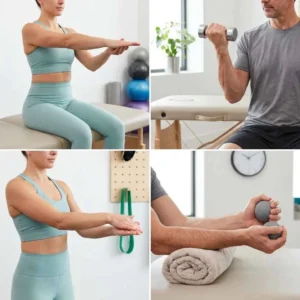
Gentle Elbow Pain Relief Flexion and Extension
A simple mobility exercise is slowly bending and straightening the elbow through a comfortable range.
The movement should be controlled rather than forced. The purpose is to maintain or improve range of motion without unnecessarily irritating sensitive tissues.
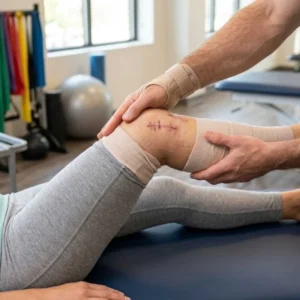
For someone recovering from an elbow injury or surgery, the appropriate range and timing can be very different from those for someone experiencing an uncomplicated overuse problem. TheraCave’s rehabilitation guidance emphasizes gradual progression and following the appropriate recovery stage.
Forearm Rotation
Forearm pronation and supination involve rotating the palm downward and upward.
These movements are important because the forearm contributes to many daily activities, including turning handles, using tools, typing, lifting, and sports movements.
A gentle rotation exercise can help maintain mobility when performed within a comfortable range. However, anyone with a significant injury or recent surgery should have the appropriate movement confirmed by their healthcare professional.
Gentle Stretching
Stretching can help address stiffness and reduced flexibility around the forearm and elbow.
TheraCave includes guided stretching among its hands-on therapy offerings, with the goal of improving range of motion, reducing muscle tension, and supporting mobility.
The important point is that stretching should not become an aggressive attempt to force painful tissues into a larger range.
Grip Strengthening
Grip strength can become affected when Elbow Pain Relief makes gripping uncomfortable or when forearm muscles have become weak.
Once symptoms are sufficiently controlled, exercises such as gentle hand squeezes or therapy-putty work may help rebuild strength.
TheraCave’s elbow rehabilitation resources include grip-strengthening exercises as part of progressive recovery.
Progressive Strengthening Is Key to Long-Term Recovery
One of the most important principles in Elbow Pain Relief rehabilitation is progression.
Someone with irritated tendons may initially need pain-management strategies and gentle movement. As tolerance improves, the rehabilitation program can gradually introduce strengthening and more demanding functional movements.
For tennis Elbow Pain Relief, TheraCave specifically emphasizes progressive loading to help rebuild tendon capacity rather than relying exclusively on rest. Its rehabilitation guidance includes wrist extension strengthening, eccentric loading, and grip-strengthening exercises.
This progression matters because a tendon that feels better is not necessarily ready to handle the same workload that caused the original problem.
A structured program gradually increases the demands placed on the tissues.
Isometric Exercises
Isometric exercises involve contracting a muscle without significant joint movement.
For elbow rehabilitation, appropriately prescribed isometric contractions can provide a way to introduce strengthening while controlling movement.
The exact position, resistance, duration, and frequency should depend on the individual’s condition.
Resistance-Band Exercises
Resistance bands can be useful for gradually rebuilding forearm and arm strength.
TheraCave’s rehabilitation resources include resistance-band strengthening as part of later-stage Elbow Pain Relief recovery.
The objective is controlled resistance rather than maximum effort. Increasing resistance too quickly can aggravate an already irritated tendon.
Why Professional Assessment Matters
Elbow pain does not have one universal cause.
It may involve an overuse injury, tendon irritation, joint stiffness, weakness, movement mechanics, arthritis, trauma, or another condition. TheraCave’s approach begins with a thorough physical evaluation and uses the findings to develop an individualized treatment plan.
The Same Exercise Isn’t Right for Everyone
An exercise that helps one person may aggravate another.
For example, someone with mild overuse-related tendon pain may benefit from progressive strengthening, while someone recovering from surgery may need a carefully controlled rehabilitation progression.
TheraCave’s post-surgical elbow guidance illustrates how rehabilitation changes by recovery phase, moving from gentle mobility toward active range of motion, strengthening, and functional activities as healing progresses.
Technique Matters
Even a good exercise can become counterproductive if performed with poor mechanics or excessive resistance.
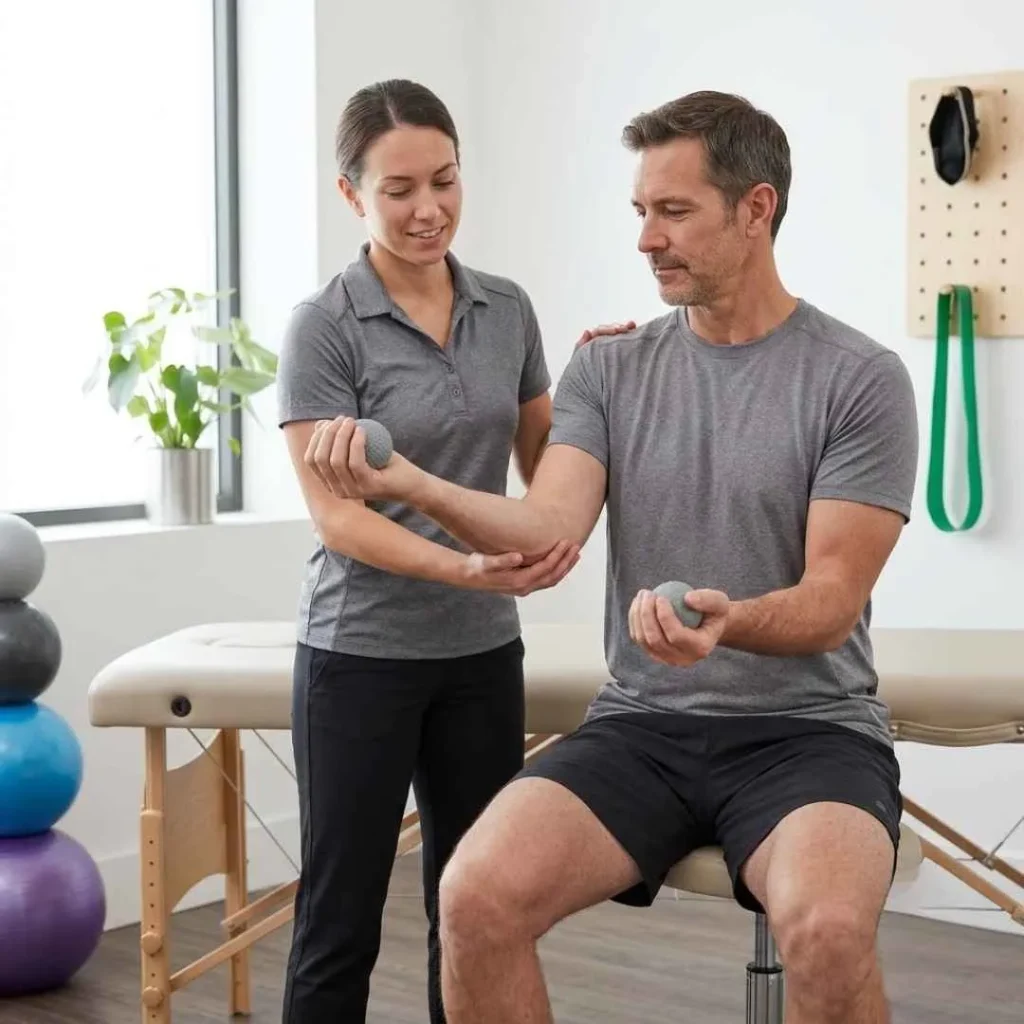
A physical therapist can observe how the elbow, wrist, shoulder, and forearm work together and make adjustments to technique.
TheraCave uses personalized exercise programs and professional guidance to help patients perform movements correctly while progressing toward improved strength, flexibility, and function.
Exercises Alone May Not Be Enough
Exercise is an important part of rehabilitation, but TheraCave does not treat elbow pain as an exercise-only problem.
Its physical therapy approach can combine therapeutic exercise with manual therapy, dry needling, kinesiology taping, and other modalities when clinically appropriate. Manual therapy may include joint mobilization, myofascial release, and soft-tissue techniques designed to improve mobility and reduce pain.
For stubborn tendon problems, TheraCave also offers shockwave therapy. The clinic identifies elbow conditions such as tennis elbow and golfer’s elbow among the problems that may be treated using radial pressure wave therapy.
The appropriate combination depends on the individual’s evaluation rather than following a one-size-fits-all routine.
A Typical Fort Lauderdale Elbow Pain Scenario
Consider a Fort Lauderdale resident who spends long hours at a computer and also participates in recreational strength training. After several weeks of repeated gripping and lifting, an aching sensation develops around the outside of the elbow.
At first, the discomfort appears only after exercise. Eventually, gripping a coffee mug, opening a container, or carrying a bag becomes uncomfortable.
Simply stopping exercise may reduce symptoms temporarily, but the underlying weakness or movement problem may remain.
A professional evaluation can determine whether the symptoms are consistent with an overuse-related condition and identify contributing factors. From there, rehabilitation may begin with pain management and mobility before progressing toward targeted forearm strengthening and functional loading.
This approach is more useful than randomly performing exercises because the rehabilitation plan changes according to how the patient responds.
TheraCave’s sports rehabilitation process follows this general progression: assessment and diagnosis, pain relief and tissue healing, followed by progressive strength, stability, and mobility restoration.
When to Stop Exercising and Seek Professional Help
Mild discomfort during rehabilitation can sometimes occur, but sharp, worsening, or unusual pain should not simply be pushed through.
Professional evaluation is especially important when elbow pain is persistent, progressively worsening, associated with significant swelling, or interfering with basic activities.
Numbness or tingling into the hand or fingers can also indicate that something beyond a simple muscle or tendon problem may be involved.
People recovering from surgery, fractures, significant injuries, or other diagnosed conditions should follow their physician’s or physical therapist’s specific rehabilitation instructions rather than applying a generic exercise routine.
How Physical Therapy Restores Elbow Function
The objective of physical therapy is not simply to make an elbow hurt less.
Long-term recovery involves restoring the abilities that matter in everyday life.
That can include:
- Bending and straightening the elbow comfortably
- Improving forearm mobility
- Restoring grip strength
- Building tendon and muscle capacity
- Improving movement mechanics
- Returning to work or recreational activities
- Reducing the likelihood of recurring problems
TheraCave’s exercise physiotherapy approach is designed to improve strength, flexibility, endurance, mobility, and function while helping patients return to the activities they value.
FAQs About Elbow Pain Relief Exercises
What is the best exercise for elbow pain?
There is no single best exercise for every type of elbow pain. The appropriate exercises depend on whether the problem involves tendon irritation, joint stiffness, weakness, injury, surgery, or another condition.
Can exercise reduce elbow pain?
Appropriately prescribed therapeutic exercise can help improve strength, mobility, and function and may reduce pain over time. TheraCave uses progressive exercise as part of its rehabilitation approach for elbow conditions.
Should I exercise if my elbow hurts?
That depends on the cause and severity of the pain. Gentle movement may be appropriate for some conditions, while certain injuries require rest or specific medical restrictions. Avoid pushing through sharp or worsening pain and seek professional guidance when symptoms persist.
How can physical therapy help elbow pain?
Physical therapy can combine evaluation, targeted exercise, manual therapy, stretching, strengthening, and other appropriate treatments to address pain while restoring movement and function.
Can physical therapy help tennis or golfer’s elbow?
Yes. TheraCave specifically treats both tennis elbow and golfer’s elbow using individualized rehabilitation approaches that can include progressive strengthening, manual therapy, stretching, and other appropriate interventions.
Restore Comfortable Elbow Function in Fort Lauderdale
Elbow pain can gradually turn simple movements into daily frustrations, especially when repetitive work, exercise, or sports continue to place stress on the affected tissues. Carefully selected exercises can play an important role in recovery, but the right exercise program depends on understanding why the elbow hurts in the first place.
TheraCave Physical Therapy provides individualized evaluation and rehabilitation for elbow and hand conditions, combining therapeutic exercise with hands-on care and advanced treatment options when appropriate. Its approach focuses on reducing pain, restoring mobility, rebuilding strength, and helping patients return to normal activities with greater confidence.
If elbow pain is affecting your work, workouts, sports, or everyday activities, contact TheraCave Physical Therapy at (954) 284-0716 to schedule an evaluation and discuss a personalized recovery plan.