
Most people don’t think about their jaw until something feels off. You chew, talk, and yawn every day without pain, this is what a normal jaw should feel like. But when discomfort, clicking, or stiffness starts, it may point to TMJ dysfunction.
Understanding the difference between TMJ vs normal jaw is important because many people ignore early signs, thinking it’s temporary. In reality, early treatment can prevent long-term discomfort and complications.
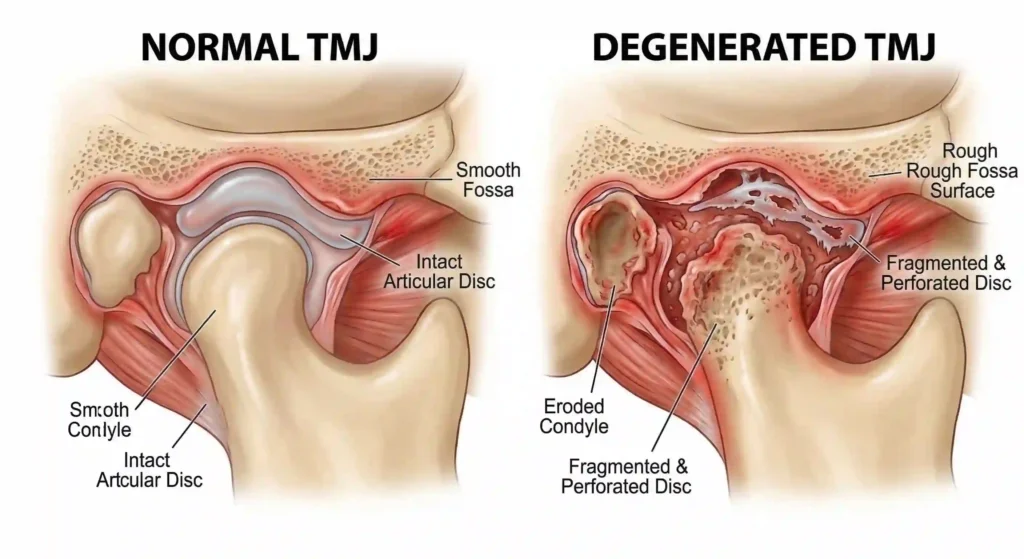
What Is a Normal Jaw Function?
A normal jaw works smoothly and without pain. The temporomandibular joint (TMJ) acts like a sliding hinge connecting your jawbone to your skull.
Key Signs of a Healthy Jaw
- No pain while chewing or speaking
- Smooth opening and closing of the mouth
- No clicking or popping sounds
- Full range of motion
- No headaches or facial tension
In short, a normal jaw operates quietly, comfortably, and efficiently.
What Is TMJ Dysfunction?
TMJ dysfunction (also called TMD) occurs when the jaw joint or surrounding muscles don’t function properly. This can lead to pain, restricted movement, and other symptoms that affect daily life.
TMJ disorders impact the joint and muscles responsible for jaw movement, often causing discomfort and functional issues.
TMJ vs Normal Jaw: The Core Differences
1. Pain vs Comfort
- Normal Jaw: No pain during movement
- TMJ: Pain in the jaw, face, or near the ear
Pain is one of the biggest warning signs. TMJ discomfort can even spread to the neck and head.
2. Smooth Motion vs Restricted Movement
- Normal Jaw: Opens and closes freely
- TMJ: May feel stiff or locked
Some people with TMJ struggle to fully open or close their mouths, which can affect eating and speaking.
3. Silent Movement vs Clicking Sounds
- Normal Jaw: No sound during movement
- TMJ: Clicking, popping, or grinding noises
While occasional clicking without pain may not be serious, persistent sounds with discomfort usually indicate dysfunction.
4. Normal Chewing vs Painful Chewing
- Normal Jaw: Eating is effortless
- TMJ: Pain or discomfort while chewing
This can lead people to avoid certain foods or chew on one side only.
5. No Headaches vs Frequent Tension
- Normal Jaw: No related headaches
- TMJ: Frequent headaches or migraines
TMJ issues often cause tension in surrounding muscles, leading to recurring headaches.
A Common Real-Life Situation
A typical case many patients experience:
A working professional starts noticing mild jaw clicking while eating. At first, it seems harmless. Over time, the clicking turns into pain, especially during long meetings or stressful days.
Eventually, they develop:
- Morning jaw stiffness
- Headaches during work
- Difficulty chewing tougher foods
What started as a small issue becomes a daily discomfort.
This is how TMJ often progresses, gradually, but noticeably.
What Causes TMJ Dysfunction?
TMJ is rarely caused by a single factor. It usually develops due to a combination of issues.
Common Causes Include:
- Teeth grinding or clenching (bruxism)
- Stress and muscle tension
- Jaw injury or trauma
- Arthritis affecting the joint
- Poor bite alignment
Habits like nail biting or excessive gum chewing can also strain the jaw over time.
Why TMJ Should Not Be Ignored

Many people assume jaw discomfort will go away on its own, but untreated TMJ can worsen.
Possible Complications:
- Chronic pain
- Limited jaw movement
- Sleep disturbances
- Difficulty eating
- Increased stress and discomfort
Early care is key to preventing long-term problems.
How Professional Treatment Helps
TMJ is not something you should try to manage alone. Professional care focuses on addressing the root cause, not just symptoms.
According to treatment approaches like those outlined by clinics such as TheraCave, TMJ care often includes:
- Targeted physical therapy
- Muscle relaxation techniques
- Jaw alignment support
- Pain management strategies
- Personalized treatment plans
These methods aim to restore natural jaw movement and reduce pain effectively.
Signs You Should Seek Help
You should consider professional treatment if you notice:
- Persistent jaw pain
- Clicking with discomfort
- Difficulty opening your mouth
- Frequent headaches or facial pain
- Jaw locking or stiffness
These are clear signs your jaw is not functioning normally.
Restore Your Jaw Health Today
Your jaw plays a crucial role in your daily life, from eating to speaking. Ignoring TMJ symptoms can turn small discomfort into a long-term issue.
The good news? With the right professional care, TMJ can be effectively managed and improved.
Call to Action
If you’re experiencing jaw pain, clicking, or stiffness, don’t wait for it to get worse.
Contact us today to book your TMJ consultation, get expert care, and start your journey toward pain-free jaw movement.