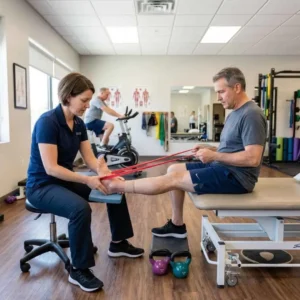
Plantar fasciitis is one of the most common causes of heel pain, especially in active adults and people who spend long hours standing. Even after the sharp pain improves, many people make the mistake of stopping treatment too early, leading to recurring flare-ups.
The key to long-term recovery is not just stretching, but strengthening the foot, ankle, and calf muscles so they can properly support the plantar fascia. Research shows that strengthening exercises improve load tolerance in the foot and help reduce recurring pain over time.
In this guide, we’ll break down safe, effective, and evidence-based ways to rebuild strength after plantar fasciitis so you can walk, stand, and move without pain returning.
Why Strengthening Matters After Plantar Fasciitis
The plantar fascia is a thick band of tissue that supports your arch and absorbs impact when you walk. When it becomes overstressed, it develops micro-tears and inflammation, causing heel pain and stiffness, especially during the first steps in the morning.
Once pain starts to improve, the tissue is still weak. Without strengthening, the foot continues to rely too heavily on the plantar fascia instead of surrounding muscles like:
- Intrinsic foot muscles (arch stabilizers)
- Calf muscles (gastrocnemius and soleus)
- Small stabilizers around the ankle
Strengthening these areas reduces strain on the Plantar Fasciitis and helps prevent re-injury.

Phase 1: Gentle Foot Activation (Early Recovery)
These exercises are ideal when pain is still mild but improving.
1. Towel Scrunches (Toe Curls)
One of the most recommended strengthening exercises for plantar fasciitis is towel scrunching, which activates the small muscles in your foot that support the arch.
How to do it:
- Sit in a chair with a towel under your foot
- Use your toes to scrunch the towel toward you
- Relax and repeat
Why it works: Builds intrinsic foot strength and improves arch control.
2. Toe Extensions
Toe extension improves flexibility and strengthens the foot’s supporting structures.
How to do it:
- Cross one leg over the other
- Gently pull toes upward toward your shin
- Hold for a few seconds and repeat
This helps restore normal foot movement and reduces stiffness.
Phase 2: Arch Strengthening and Stability
Once basic movement is comfortable, you move into strengthening the arch and stabilizing the foot.
3. Short Foot Exercise (Arch Doming)
This is one of the most effective long-term exercises for Plantar Fasciitis recovery.
How to do it:
- Keep your toes relaxed on the ground
- Gently “pull” the ball of your foot toward your heel
- Lift the arch without curling toes
Why it matters: It directly trains the muscles that support your arch, reducing stress on the plantar fascia.
4. Marble or Object Pickups
Plantar Fasciitis improves coordination and strength in the small foot muscles.
How to do it:
- Place small objects on the floor
- Pick them up using your toes
- Place them into a bowl
This strengthens grip-like control in the foot, improving stability during walking.
Phase 3: Calf and Ankle Strengthening
Weak or tight calf muscles are one of the biggest contributors to plantar fasciitis because they increase strain on the heel and arch.
5. Standing Calf Raises
Calf raises help build strength in the lower leg and improve shock absorption during walking.
How to do it:
- Stand with feet hip-width apart
- Slowly raise your heels
- Hold briefly, then lower slowly
Progression: Do it on a step for a deeper stretch and stronger muscle engagement.
6. Wall Calf Stretch (with Strength Focus)
Although it looks like a stretch, it also helps retrain ankle stability.
How to do it:
- Place hands on a wall
- Step one foot back
- Keep heel down and lean forward
- Hold 30–60 seconds
This improves flexibility in the Achilles tendon, which reduces stress on the plantar fascia.
Phase 4: Balance and Ankle Stability Training
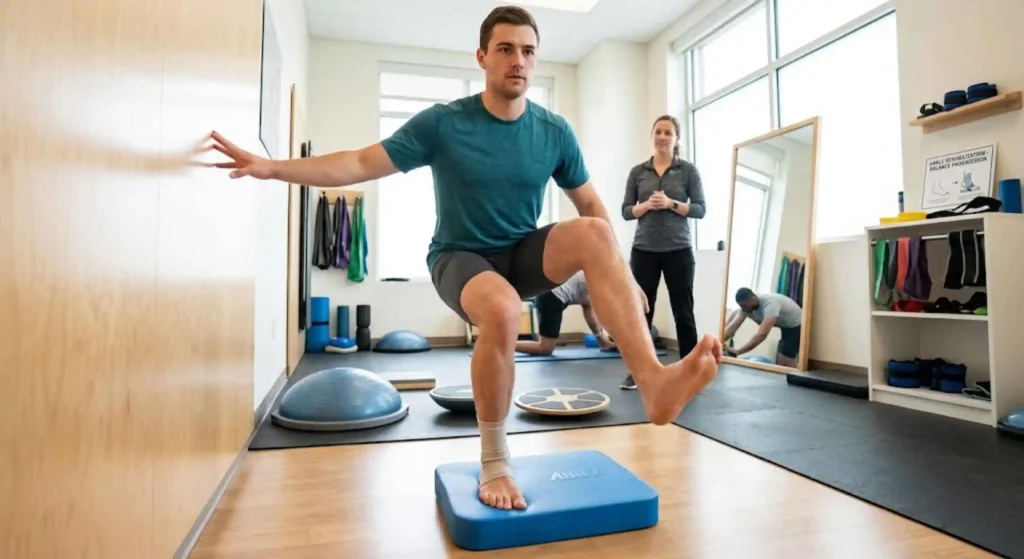
Once strength improves, balance training becomes essential.
7. Single-Leg Balance
This improves ankle control and prevents overloading the plantar fascia.
How to do it:
- Stand on one foot
- Keep posture upright
- Hold for 20–30 seconds
- Switch sides
Progression: Try closing your eyes or standing on a soft surface.
8. Heel-to-Toe Walking
This helps retrain proper walking mechanics.
How to do it:
- Walk slowly in a straight line
- Land heel first, roll through foot, push off toes
This reinforces natural foot alignment and reduces abnormal strain patterns.
Job Story: A Gradual Recovery That Actually Worked
A patient recovering from plantar fasciitis tried resting completely for weeks, but pain kept returning when they resumed normal activity. The issue wasn’t inflammation, it was weakness.
Once they started a structured strengthening routine (towel scrunches, calf raises, and balance training), progress became noticeable within a few weeks. Morning heel pain reduced, walking felt more stable, and flare-ups became less frequent.
The key difference was consistency, daily strengthening instead of occasional stretching.
Common Mistakes to Avoid
Only Stretching Without Strengthening
Stretching alone gives short-term relief but doesn’t fix the root weakness.
Returning to Activity Too Quickly
Jumping back into running or long standing too early can restart pain.
Ignoring Ankle Strength
Weak ankles force the plantar fascia to absorb too much load.
When to Seek Professional Help
You should consider professional care if:
- Pain lasts longer than 6–8 weeks
- Morning heel pain is severe
- Walking becomes difficult
- Symptoms keep returning
A physiotherapist can build a structured rehab plan tailored to your foot mechanics.
Final Thoughts
Strengthening your foot and ankle after plantar fasciitis is the most important step for preventing long-term recurrence. By combining arch strengthening, calf exercises, and balance training, you rebuild support around the plantar fascia so it no longer carries excessive strain.
Call to Action
Consistency matters more than intensity. A simple daily routine can restore strength, improve stability, and help you return to pain-free movement with confidence. Contact us today!