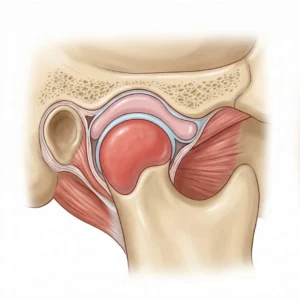
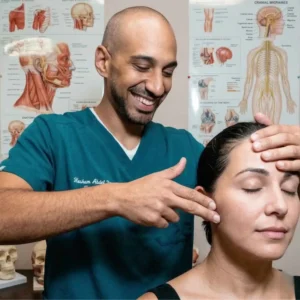
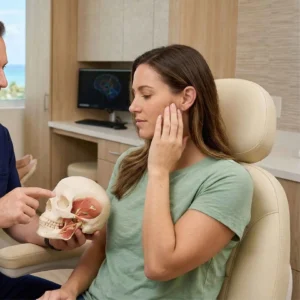
If you’re living in Fort Lauderdale and dealing with frequent headaches, the cause may be much closer than you think, right at your jaw joint. Temporomandibular joint disorder, commonly called TMJ or TMD, affects the hinge that connects your jawbone to your skull. This joint plays a major role in everyday movements such as chewing, talking, yawning, and biting. When it becomes inflamed, misaligned, or overloaded, the pain can radiate through your head, neck, and face, often appearing as recurring headaches.
Because TMJ symptoms resemble migraines and tension headaches, many people treat only the pain without realizing the jaw is the real culprit. Learning how TMJ works and how it creates headaches is the first step toward relief.

What Exactly Is TMJ Disorder?
Your temporomandibular joint acts like a sliding hinge supported by muscles, ligaments, and a small cushioning disc. TMJ disorder occurs when something disrupts this delicate system. That disruption may come from:
- Chronic teeth grinding or clenching (especially during sleep)
- Stress and muscle tension
- Arthritis or joint degeneration
- A misaligned bite
- Jaw trauma
- Overuse from chewing gum or biting hard foods
When the joint doesn’t move smoothly, the surrounding muscles work harder than they should. That strain can cause soreness, stiffness, and ultimately persistent headaches.
TMJ is common among adults, especially those dealing with high stress levels or who unconsciously clench their jaw. But the condition can affect anyone, and it often goes unnoticed until symptoms become disruptive.
How TMJ Causes Headaches
The jaw and head are closely connected through nerves and muscles. When the jaw becomes irritated, pain signals spread, creating headaches that can vary from dull pressure to throbbing, migraine-like sensations.
Muscle Tension Spreads Upward
The muscles that control jaw movement extend into the temples, forehead, and neck. When they tighten, they create classic tension headaches the kind that feels like a band wrapped around your head.
Nerve Irritation
Inflammation around the TMJ can irritate surrounding nerves. This can produce sharp, radiating pain felt behind the eyes, ears, and temples.
Overworked Jaw From a Misaligned Bite
When your bite is uneven, your jaw must constantly “correct” itself. Over time, this leads to fatigue, tight muscles, and chronic headache patterns.
For many Fort Lauderdale residents, nighttime grinding is the biggest trigger. You may wake up with jaw stiffness, facial soreness, and most noticeably, morning headaches.
Signs Your Headaches May Be TMJ-Related
Headaches alone don’t automatically mean TMJ, but when they appear alongside other symptoms, the connection becomes clearer. Look for:
- Clicking, popping, or grinding when opening or closing your mouth
- Jaw pain or stiffness, especially in the morning
- Difficulty chewing or biting
- Ear pain, pressure, or ringing
- Face, neck, or shoulder tightness
- Limited jaw opening or jaw “locking.”
- Headaches that worsen after chewing or talking
If these patterns sound familiar, your headaches may not be starting in your head they may be starting in your jaw.
Why TMJ Headaches Are Often Misdiagnosed
Many people first speak with a primary doctor or neurologist when headaches become frequent. While that’s important, TMJ isn’t always considered right away, partly because TMJ headaches can mimic:
- Migraines
- Sinus headaches
- Tension headaches
As a result, people may rely on pain relievers, hydration, or rest without fixing the underlying cause. A dentist or TMJ specialist, however, examines jaw movement, muscle tightness, and bite alignment factors other providers may not evaluate closely.
Getting the correct diagnosis can make a huge difference.
Treatment Options for TMJ-Related Headaches
The encouraging news is that TMJ headaches are typically treatable, often without surgery.
Custom Night Guards
A professionally fitted night guard creates a protective barrier between the teeth. It reduces grinding pressure and allows jaw muscles to relax during sleep.
Physical Therapy & Jaw Exercises
Gentle stretching and strengthening exercises improve mobility, reduce stiffness, and retrain the muscles to function correctly.
Bite or Alignment Adjustments
In some cases, uneven biting surfaces or worn-down teeth contribute to jaw strain. Correcting alignment may significantly decrease TMJ stress.
Lifestyle Adjustments
Small daily changes can produce big improvements:
- Managing stress and practicing relaxation
- Avoiding chewing gum and tough foods
- Maintaining good posture, especially at a desk
- Applying warm compresses for muscle relaxation
Your provider may also recommend short-term anti-inflammatory treatments while longer-term solutions take effect.
When Should Fort Lauderdale Residents See a Professional?
Consider booking an evaluation if:
- You experience frequent headaches that don’t respond to typical treatments
- Your jaw pops, clicks, shifts, or locks
- Pain lasts more than a few days
- Headaches occur alongside jaw soreness or ear pain
Ignoring TMJ symptoms may lead to worsened joint damage and more severe headaches over time. Early care helps protect the joint and restore function.
How TMJ Relief Improves Daily Life
Chronic headaches don’t just interrupt your day they affect sleep, work productivity, driving, social plans, and family time. In a busy city like Fort Lauderdale, where outdoor activities and active lifestyles are the norm, constant pain can feel especially limiting.
Many people discover that once TMJ is properly treated:
- Headaches reduce dramatically
- Jaw movement feels smoother
- Sleep quality improves
- Neck and shoulder tension decreases
Addressing the true cause not just the symptom, leads to long-term relief rather than temporary fixes.
Final Thoughts
So, can TMJ cause headaches for Fort Lauderdale people? Absolutely. The jaw joint is deeply connected to the muscles and nerves of the head and neck, meaning irritation in one area often leads to pain in another.
If you experience headaches along with jaw discomfort, clicking, or stiffness, don’t assume it’s just stress or dehydration. A professional TMJ evaluation can reveal whether your jaw is driving your pain and guide you toward treatments that restore comfort, protect your joint, and bring lasting relief.
Call to Action
This article is for educational purposes only and should not replace professional medical or dental advice. Always consult a licensed provider for diagnosis and treatment options, so reach out to us today!