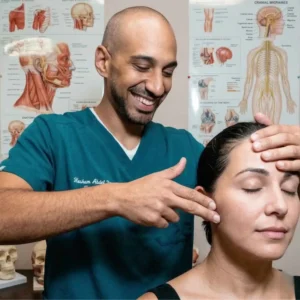
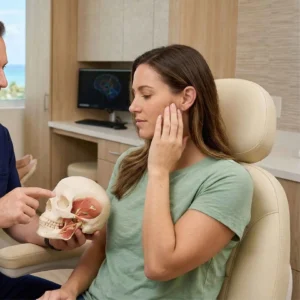
If you feel ear pain, fullness, popping, or pressure but your doctor says your ears are fine, the real issue may be your jaw.
Many residents in Fort Lauderdale experience symptoms that seem like ear infections, yet the problem actually comes from the temporomandibular joint (TMJ), the hinge that connects your jaw to your skull. When this joint is strained or misaligned, it can trigger discomfort that radiates into the ear area.
At our Fort Lauderdale office, we regularly see patients who are surprised to learn that jaw problems can absolutely cause ear pain, and the good news is that professional TMJ care can make a significant difference.
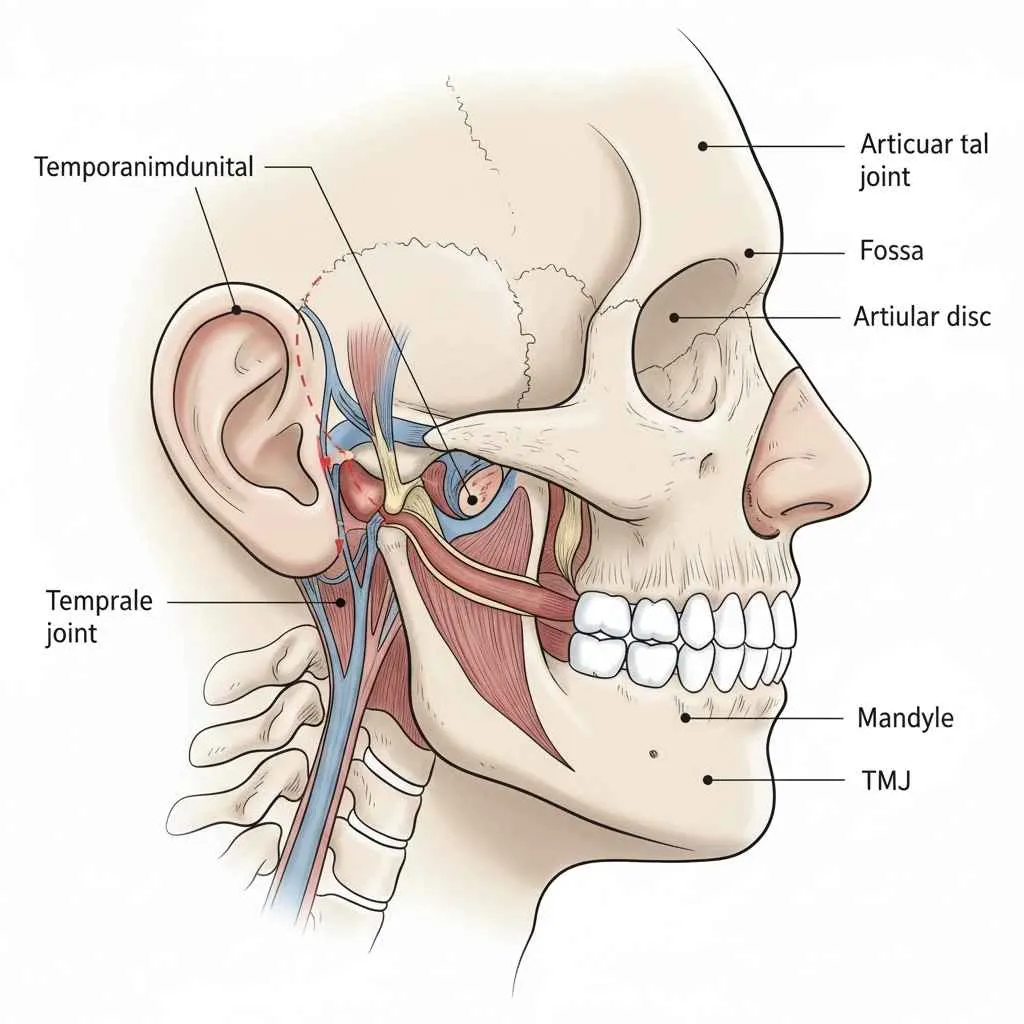
What Exactly Is TMJ?
Your TMJ is responsible for everyday movements like talking, smiling, and chewing. When the joint or surrounding muscles become irritated, the condition is called TMJ disorder (often shortened to TMD).
Because the TMJ sits directly in front of the ear, inflammation and tension can affect nearby nerves, creating sensations that feel like:
- Earaches or throbbing
- Clicking or popping sounds
- Ringing in the ears (tinnitus)
- Fullness or pressure
- Headaches that start near the ear
- Soreness when chewing or yawning
This is why ear pain and jaw problems often go hand-in-hand.
Why TMJ Pain Often Feels Like an Ear Problem
The ear and jaw share nerves, blood vessels, and muscles. When the TMJ becomes irritated, the signal pathways overlap so your brain sometimes interprets the pain as coming from the ear instead of the jaw.
Shared Nerves
Nerves such as the auriculotemporal nerve run through the TMJ region and can refer pain directly into the ear canal.
Muscle Tension
Tight jaw muscles pull surrounding tissues, causing pressure sensations that mimic ear infections.
Joint Inflammation
When the jaw joint is inflamed, swelling can push against the structures that sit right beside your ear.
This type of referred pain is very common, and it’s a key reason why a TMJ evaluation matters when ear symptoms won’t go away.
Common TMJ Triggers We See in Fort Lauderdale Patients
Every patient is different, but several patterns show up frequently:
- Teeth grinding or clenching (often during sleep)
- Stress-related jaw tension
- Uneven bite or misaligned teeth
- Previous jaw injuries
- Arthritis in the jaw joint
- Poor posture or long hours at a computer
- Chewing on one side more than the other
Lifestyle here in South Florida, including long commutes, remote work setups, and high stress, can contribute to jaw strain without people realizing it.
TMJ Ear Pain vs. Ear Infection: How Are They Different?
Because symptoms overlap, people often treat TMJ pain as a repeated ear infection,s but the causes and treatments are completely different.
Signs It May Be TMJ-Related:
- Ear pain comes and goes
- Pain worsens when chewing, yawning, or talking
- You hear clicking when moving your jaw
- Your jaw feels tight in the morning
- There’s no fever or drainage
- Your doctor says your ears look normal
If this sounds familiar, TMJ could be the missing piece, and it’s important to address the source rather than chasing temporary relief.
Why Professional TMJ Care Matters (And Why DIY Isn’t Enough)
Many people try to “tough it out” or rely on quick fixes. Unfortunately, untreated TMJ issues can worsen over time leading to more jaw locking, headaches, or chronic ear discomfort.
Our Fort Lauderdale TMJ team provides safe, non-surgical, clinician-guided care, which may include:
- Comprehensive jaw and bite evaluation
- Digital imaging, when necessary
- Custom oral appliances (instead of generic mouthguards)
- Bite balance adjustments
- Targeted muscle therapy
- Stress and jaw-relaxation guidance
- Coordination with dentists or medical specialists when appropriate
We focus on root-cause solutions, not band-aid approaches.
What Happens During a TMJ Appointment?
We keep things comfortable and simple:
- Conversation & Symptom Review – We listen to where you feel pain and when it started.
- Jaw Function Exam – Gentle assessment of movement, alignment, and muscle tension.
- Diagnostic Insights – Imaging if needed to check joint structure.
- Personalized Plan – Clear explanation of options, timelines, and expectations.
- Ongoing Support – Follow-ups to track progress and fine-tune treatment.
Our approach is patient-centered, transparent, and designed to relieve discomfort, not add stress.
Can TMJ Ear Pain Go Away?
Yes many patients experience significant relief once the jaw joint is supported and aligned properly. Improvement timelines vary, but most people notice positive changes as inflammation and muscle strain reduce.
And because our treatment plans are supervised, we make adjustments as your body responds, keeping comfort and safety top priority.
When Should You Contact a TMJ Specialist?
Reach out for an evaluation if you notice:
- Ongoing ear pain with no infection
- Clicking, popping, or locking jaw
- Frequent headaches or facial tension
- Morning jaw soreness or teeth grinding
- Difficulty opening or closing your mouth
- Pain that keeps returning despite medication
You don’t have to guess; a professional assessment answers the “why” behind your symptoms.
Why Fort Lauderdale Patients Trust Our TMJ Care
People choose our practice because we offer:
- Experienced, TMJ-focused clinicians
- Gentle, patient-first exams
- Custom treatment is never one-size-fits-all
- Non-surgical, conservative options whenever possible
- Modern technology and detailed diagnostics
- Clear communication every step of the way
Our mission is simple: reduce pain, protect the jaw, and restore comfort.
Call to Action: Get Expert TMJ Help and Relief From Ear Pain
If ear pain keeps returning, and nothing seems to explain it, your jaw may be trying to tell you something. Our Fort Lauderdale TMJ team is here to help identify the cause and build a treatment plan tailored to you.
Schedule a consultation today and take the first step toward real, lasting relief.
Let our specialists evaluate your symptoms, answer your questions, and guide you with proven, professional care.